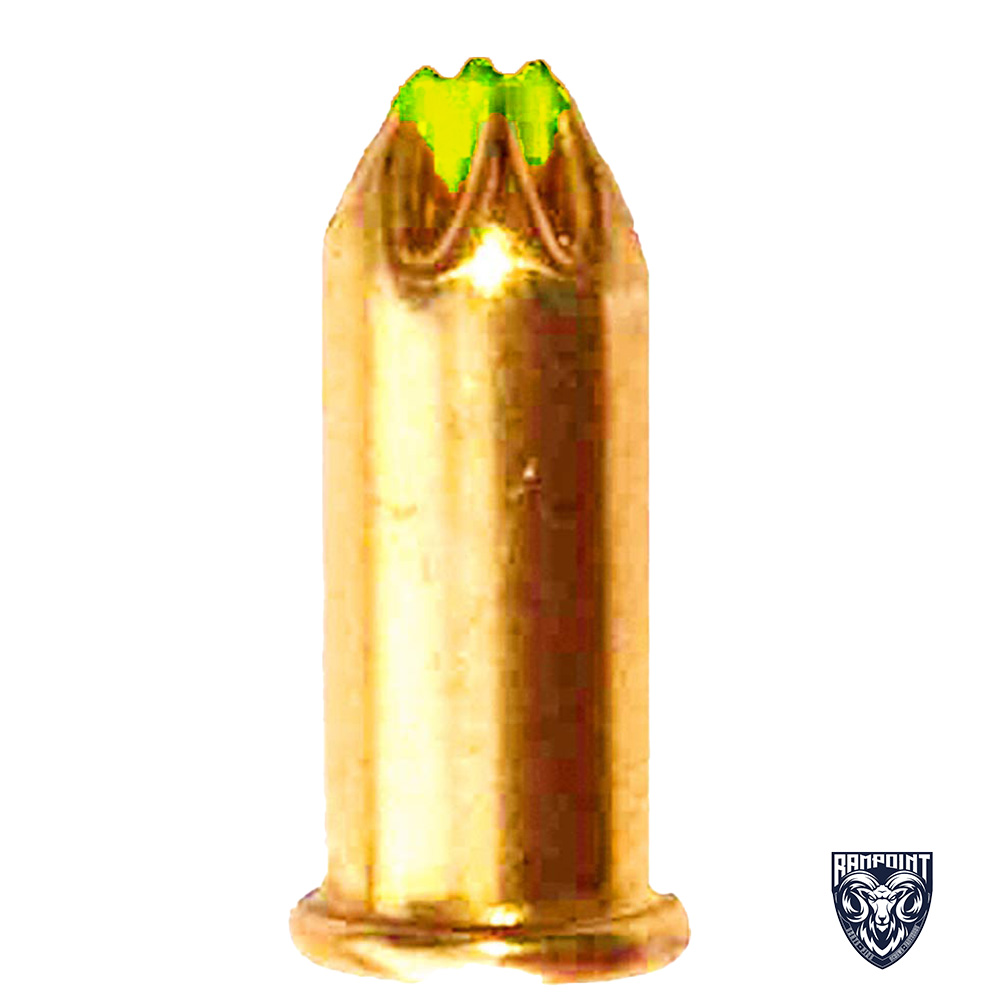
Powder-actuated tools are often used because of their speed of operation, compared to other processes such as drilling and then installing a threaded fastener. They can more easily be used in narrow or awkward locations, such as installing steel suspension clips into an overhead concrete ceiling. Powder-actuated tools are powered by small explosive cartridges, which are triggered when a firing pin strikes a primer, a sensitive explosive charge in the base of the cartridge. The primer ignites the main charge of powder, which burns rapidly. The hot gases released by the burning of the propellant rapidly build pressure within the cartridge, which pushes either directly on the head of the fastener, or on a piston, accelerating the fastener out of the muzzle. Powder-actuated tools come in high-velocity and low-velocity types. In high-velocity tools, the propellant charge acts directly on the fastener in a process similar to a firearm. Low-velocity tools introduce a piston into the chamber. The propellant acts on the piston, which then drives the fastener into the substrate. The piston is analogous to the bolt of a captive bolt pistol. A tool is considered low velocity if the average test velocity of the fastener is not in excess of 300 ft/s (91 m/s) with no single test having a velocity of over 108 m/s (350 ft/s).[1] A high velocity tool propels or discharges a stud, pin, or fastener in excess of 300 ft/s (91 m/s).[1] High-velocity tools made or sold in the United States must comply under certain circumstances;[2] with many being used in the shipbuilding and steel industries. Powder-actuated fasteners are made of special heat-treated steel; common nails are unsafe for this application. There are many specialized fasteners designed for specific applications in the construction and manufacturing industries. https://en.wikipedia.org/wiki/Powder-actuated_tool#:~:text=Powder%2Dactuated%20tools%20are%20powered,the%20base%20of%20the%20cartridge.